


Severe Acute Inflammatory Demyelinating Polyneuropathy (AIDP): Comprehensive Critical Care, Family Partnership, and Early Rehabilitation Leading to Successful Recovery
A 71-year-old gentleman with hypertension, ischemic heart disease, prior coronary angioplasties, severe left ventricular dysfunction (ejection fraction 25%), a cardiac resynchronization therapy-defibrillator (CRT-D), and chronic treatment with beta-blockers, statins, dual antiplatelet therapy, and antihypertensive medications developed rapidly progressive acute inflammatory demyelinating polyneuropathy (AIDP).
Within 24 hours of symptom onset, he developed respiratory failure requiring endotracheal intubation and invasive mechanical ventilation. AIDP was subsequently confirmed, and intravenous immunoglobulin (IVIg) therapy was initiated before referral to our centre.
From our perspective, plasma exchange (plasmapheresis) would have been the preferred first-line immunotherapy for a patient with fulminant disease requiring mechanical ventilation. Although both IVIg and plasma exchange are evidence-based therapies, we often favour plasma exchange in such critically ill patients because treatment can be individualised, antibody removal is immediate, and clinical recovery may be facilitated in selected patients. However, because IVIg had already been initiated, the treatment course was completed.
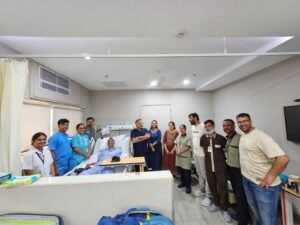
The patient remained awake, cooperative, and interactive throughout his ventilatory support. Sedation was deliberately minimized, with only low-dose fentanyl administered for comfort. Family members were encouraged to remain actively involved in patient care, providing emotional reassurance and continuous motivation, thereby greatly reducing anxiety and facilitating communication.
The ICU course was complicated by significant autonomic dysfunction, with fluctuating blood pressure and heart rate. Several cardiac medications were temporarily withheld, except aspirin, while low-molecular-weight heparin was continued for thromboprophylaxis. Careful haemodynamic monitoring and prompt management of autonomic instability allowed stabilization without major cardiovascular complications.
After approximately one week, ventilatory requirements had become minimal. However, repeated spontaneous breathing trials and two extubation attempts with high-flow nasal cannula support failed due to persistent bulbar weakness and an ineffective cough, despite adequate respiratory mechanics. Consequently, a tracheostomy was performed on day 10.
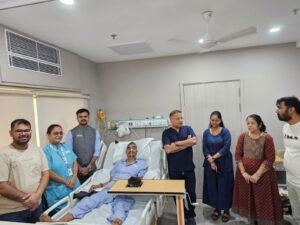
After tracheostomy, the patient was weaned from mechanical ventilation and maintained on high-flow oxygen via the tracheostomy. Early transfer from the ICU to the ward was possible because family members completed structured training in tracheostomy care, suctioning, positioning, nutrition, and recognition of clinical deterioration. This transition significantly shortened the ICU stay while maintaining patient safety.
Throughout the admission, the neurology team, under the guidance of Professor Sudhir Shah and colleagues, provided continuous expert input on disease progression and neurological
recovery. Their close collaboration with the critical care team enabled timely therapeutic decisions.
Strict antimicrobial stewardship was a key aspect of management. The patient repeatedly grew multidrug-resistant Acinetobacter species from respiratory samples and multidrug-resistant Klebsiella species from urine cultures. However, these findings represented colonization rather than active infection. In the absence of fever, hemodynamic instability, inflammatory response, or organ dysfunction suggestive of sepsis, antibiotics were intentionally withheld. This decision avoided unnecessary antimicrobial exposure and likely reduced the risk of further resistance.
Because neurological recovery remained slow after approximately three weeks, a second course of IVIg was initiated following a multidisciplinary discussion. On the fourth day of therapy, the patient developed septic shock. IVIg was immediately discontinued, appropriate antibiotics were started, and aggressive sepsis management was initiated without delay.
Remarkably, the patient’s family recognised the earliest signs of deterioration at approximately 4:00 a.m. and alerted the treating team immediately. Appropriate sepsis management was initiated within an hour. Early recognition and rapid intervention led to complete haemodynamic stabilisation within six hours, thereby avoiding ICU readmission. This episode highlighted the tremendous value of an educated and empowered family acting as an extension of the healthcare team.
Subsequently, the tracheostomy tube was replaced with a speaking tracheostomy tube. Restoring speech significantly improved communication, emotional well-being, confidence, and active participation in rehabilitation. Simultaneously, aggressive multidisciplinary physiotherapy was intensified with advanced rehabilitation devices for upper- and lower-limb strengthening, progressive mobilisation, respiratory muscle training, and functional recovery. Nutritional support was carefully optimised throughout hospitalisation to preserve muscle mass and facilitate neurological recovery.
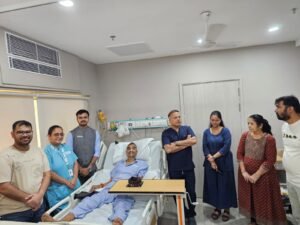
Progressive improvement in swallowing, respiratory function, and cough strength enabled successful decannulation within one week of switching to the speaking tracheostomy tube. During recovery, the patient was able to spend two to three days at home before returning for continued supervised rehabilitation, which substantially improved his confidence and psychological recovery.
At discharge, the patient was breathing independently without a tracheostomy, able to speak normally, swallow liquids safely, walk with assistance, and actively participate in strengthening exercises. Distal muscle power had improved substantially, and proximal muscle recovery was progressing well.
Learning Points
This case demonstrates that successful recovery from severe ventilator-dependent AIDP requires far more than disease-specific immunotherapy. Recovery was driven by meticulous critical care, minimal sedation, management of autonomic dysfunction, judicious antimicrobial stewardship, structured family engagement, early tracheostomy, intensive
physiotherapy, optimized nutrition, multidisciplinary collaboration, and rapid recognition of complications.
Perhaps the most important lesson from this case is that when families are educated, empowered, and integrated into the healthcare team, they become active partners in recovery rather than passive observers. Such a comprehensive model of care has the potential to shorten ICU stays, reduce complications, improve functional outcomes, and help patients return to independent living much earlier than traditionally expected.
Dr. Rajesh Chandra Mishra, MBBS, MD, FNB (Critical Care Medicine), EDIC, FCCM, FCCP, FICCM, FICP
Senior Consultant – Intensive Care & Internal Medicine Sterling Hospitals, Ahmedabad, Gujarat, India
Director, Shaibya Comprehensive Care Clinic, Ahmedabad
Past President, Indian Society of Critical Care Medicine (ISCCM) (2022–2023)
Past General Secretary, ISCCM (2019–2020)
Past Chancellor, Indian College of Critical Care Medicine (ICCM)
Former India Representative to the European Society of Intensive Care Medicine (ESICM)
Editor-in-Chief of multiple textbooks in Critical Care Medicine, Extracorporeal Therapies, and Mechanical Ventilation
Author of numerous peer-reviewed publications, book chapters, national guidelines, and invited international lectures in Critical Care Medic